
Todd Forsgren
Billings, Montana
The United States Navy's U.S. South Seas Exploring Expedition (called the Ex. Ex. for short) was an ambitious four-year trip around the world from 1838-1842. It included six ships and amidst the crew were a team of nine scientists and artists. The thousands of articles collected (from ethnographic artifacts to biological specimens) became the foundation of the Smithsonian Institution's collections.
Right around this time, in Great Britain, botanist and photographer Anna Atkins was experimenting with a new photographic technology called cyanotype. This technique uses ferric ammonium citrate and potassium ferricyanide to create blue images. Atkins laid algal specimens directly onto paper coated with these chemicals and then exposed them to sunlight. The resulting images were used to make the first photographic book: Photographs of British Algae: Cyanotype Impressions (1843).
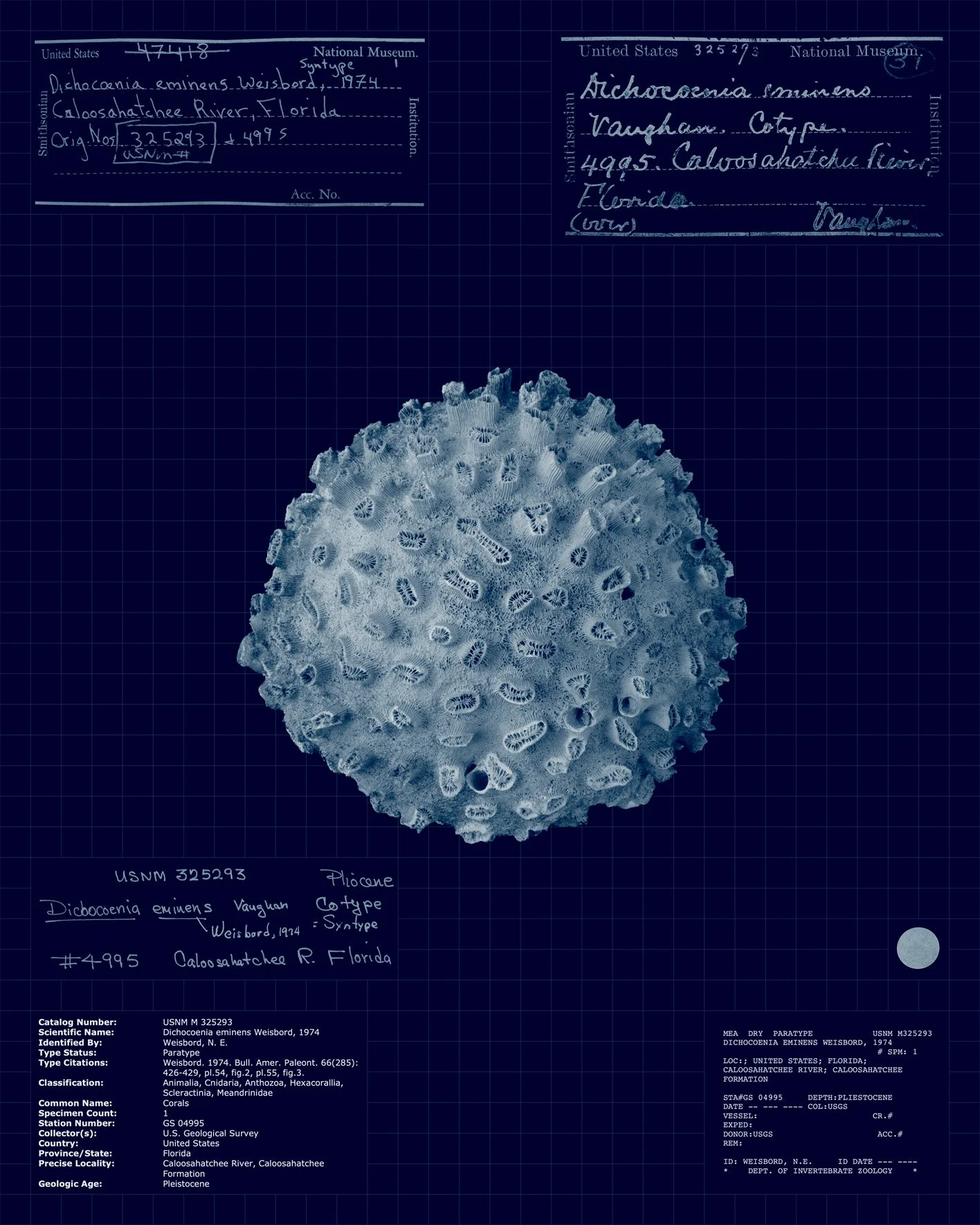
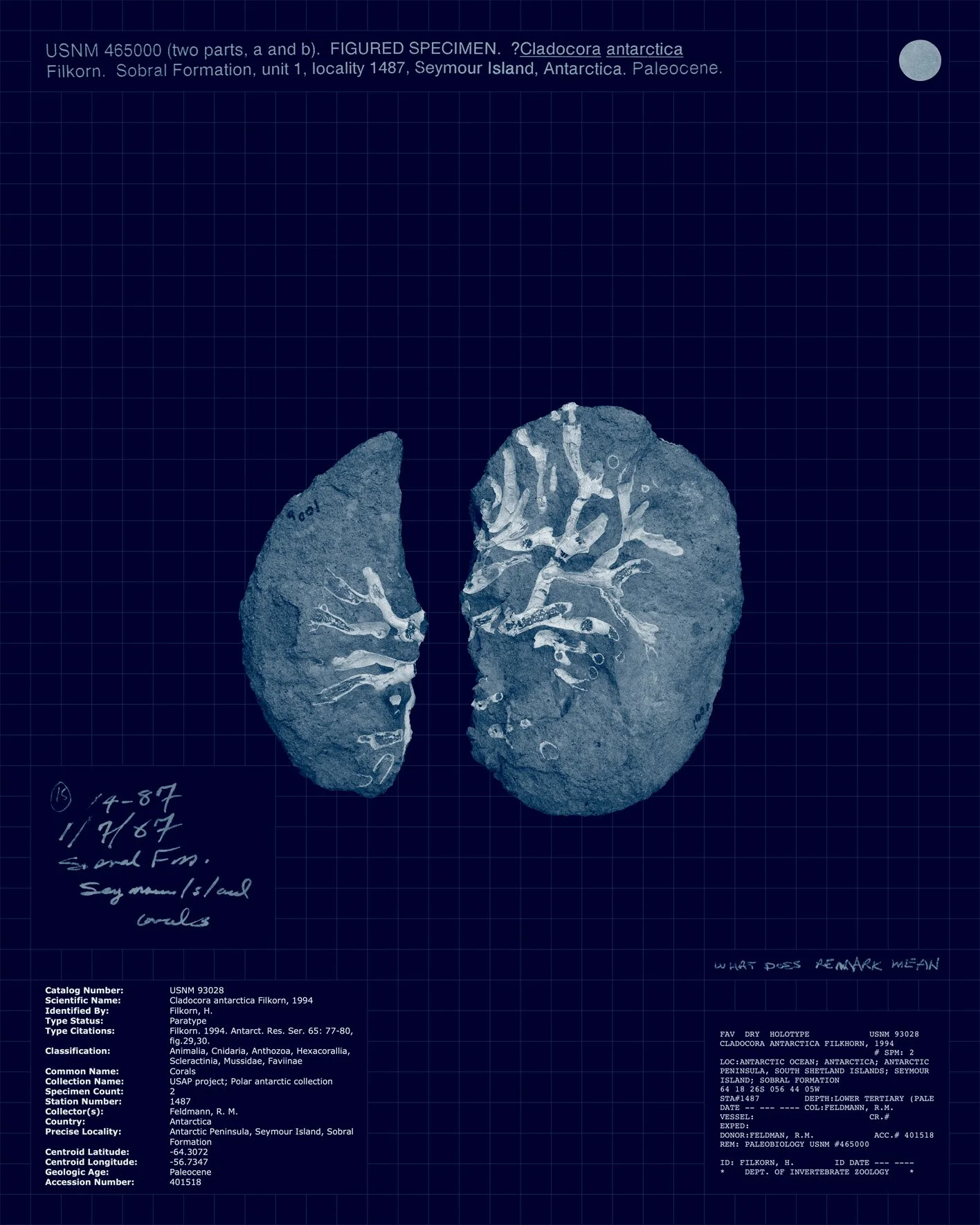
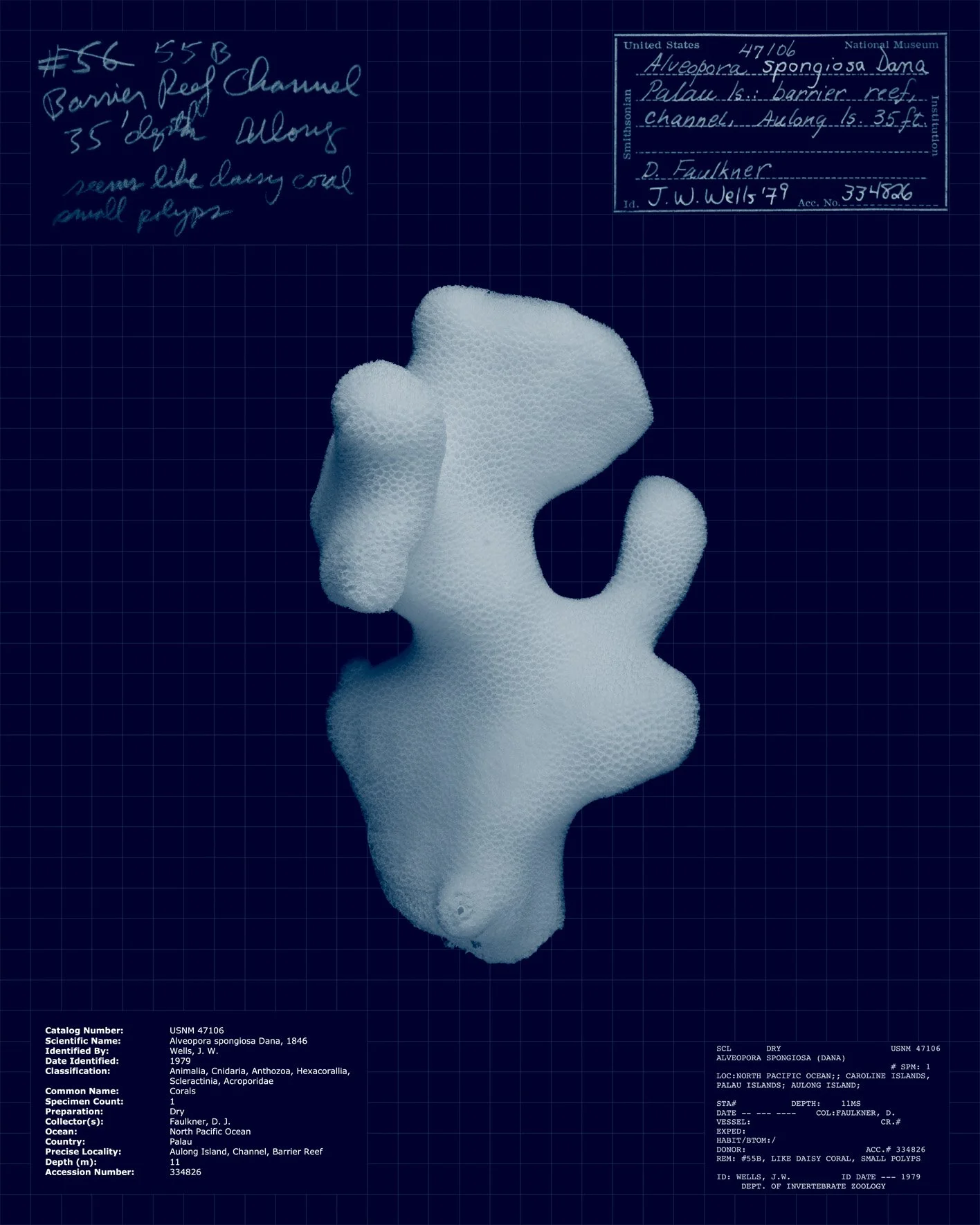
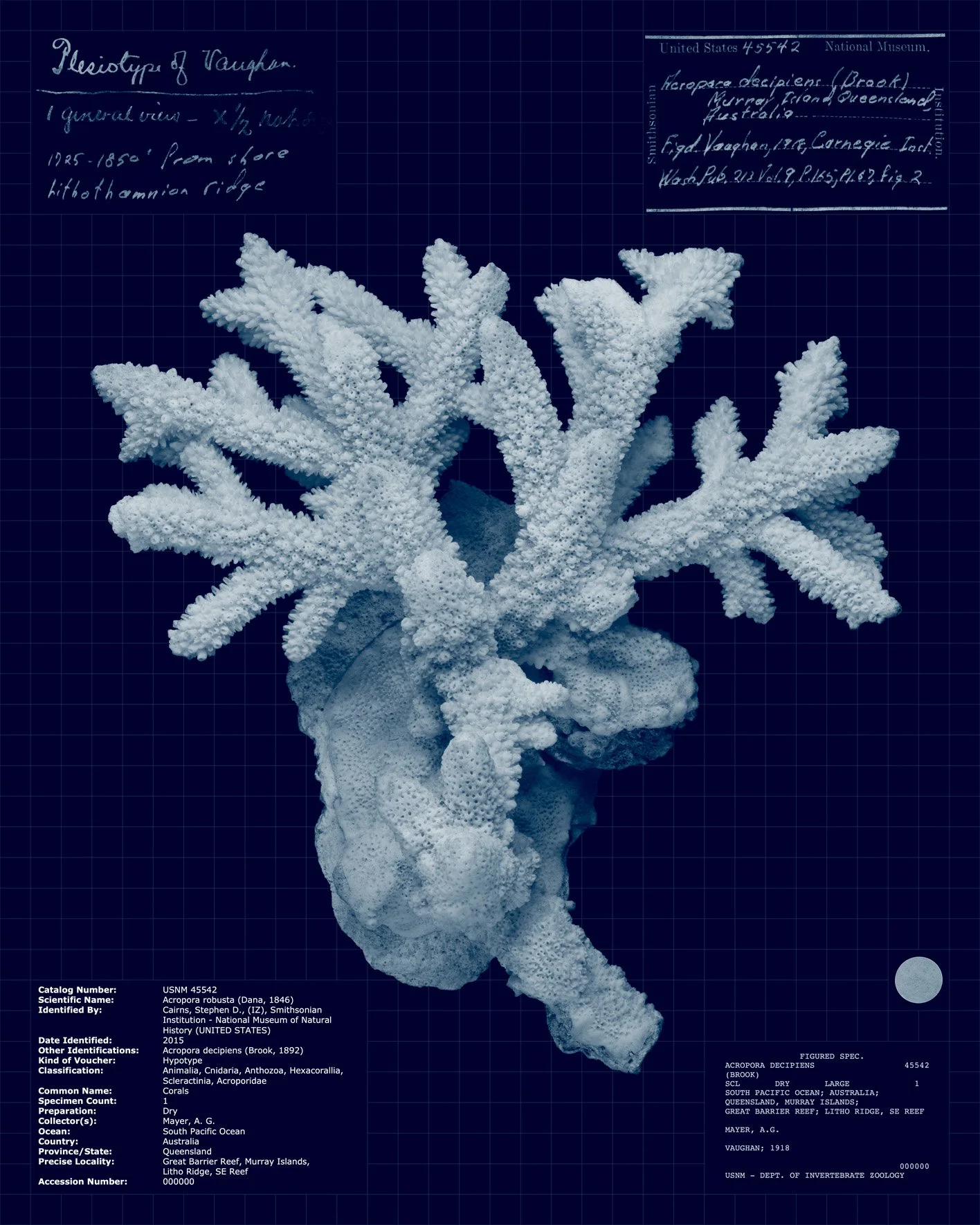
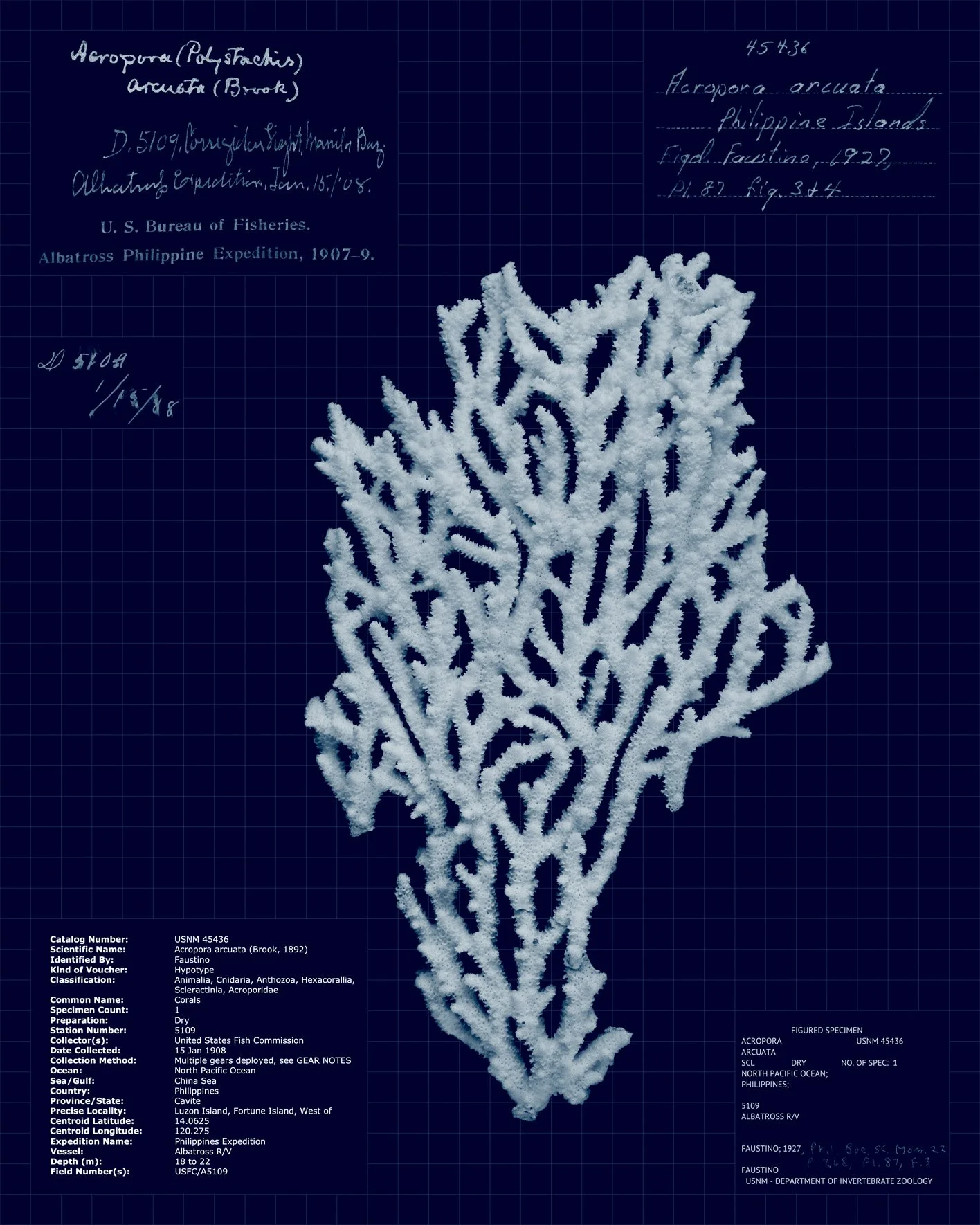
Among the specimens gathered during the Ex. Ex. were numerous stony corals, many of which were the first of their species to be described by science. Due to the technological constraints of the time, it would've been difficult to make meaningful cyanotypes of these corals, as the process is most successful with relatively flat and somewhat translucent objects (neither of which applies to most stony corals). Fortunately, with today's technology, this is no longer the case. I had the opportunity to photograph particularly charismatic specimens of coral in the Smithsonian's Invertebrate Zoology Collection (from the Ex. Ex. as well as later expeditions) and used these images to make this series of cyanotypes.
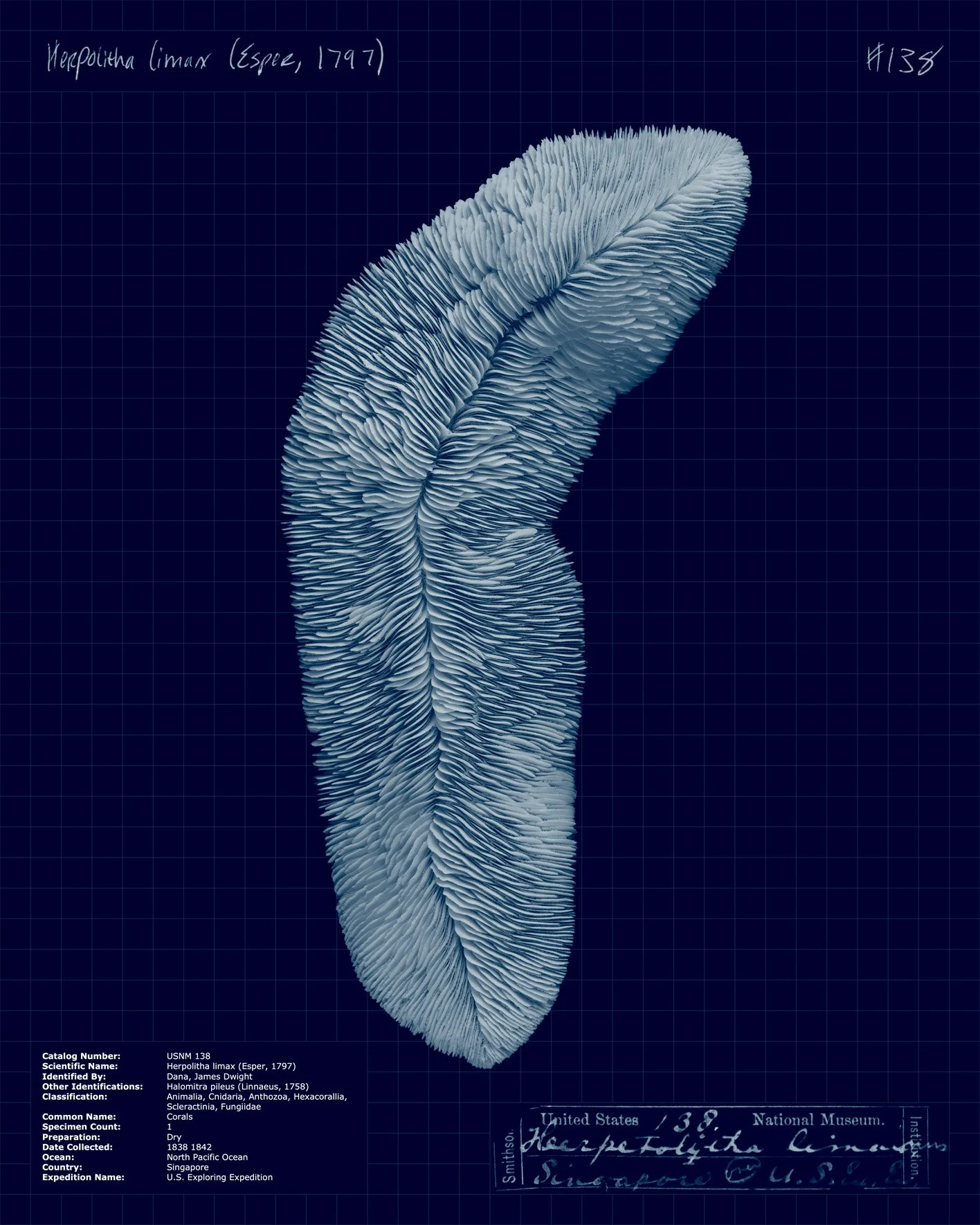
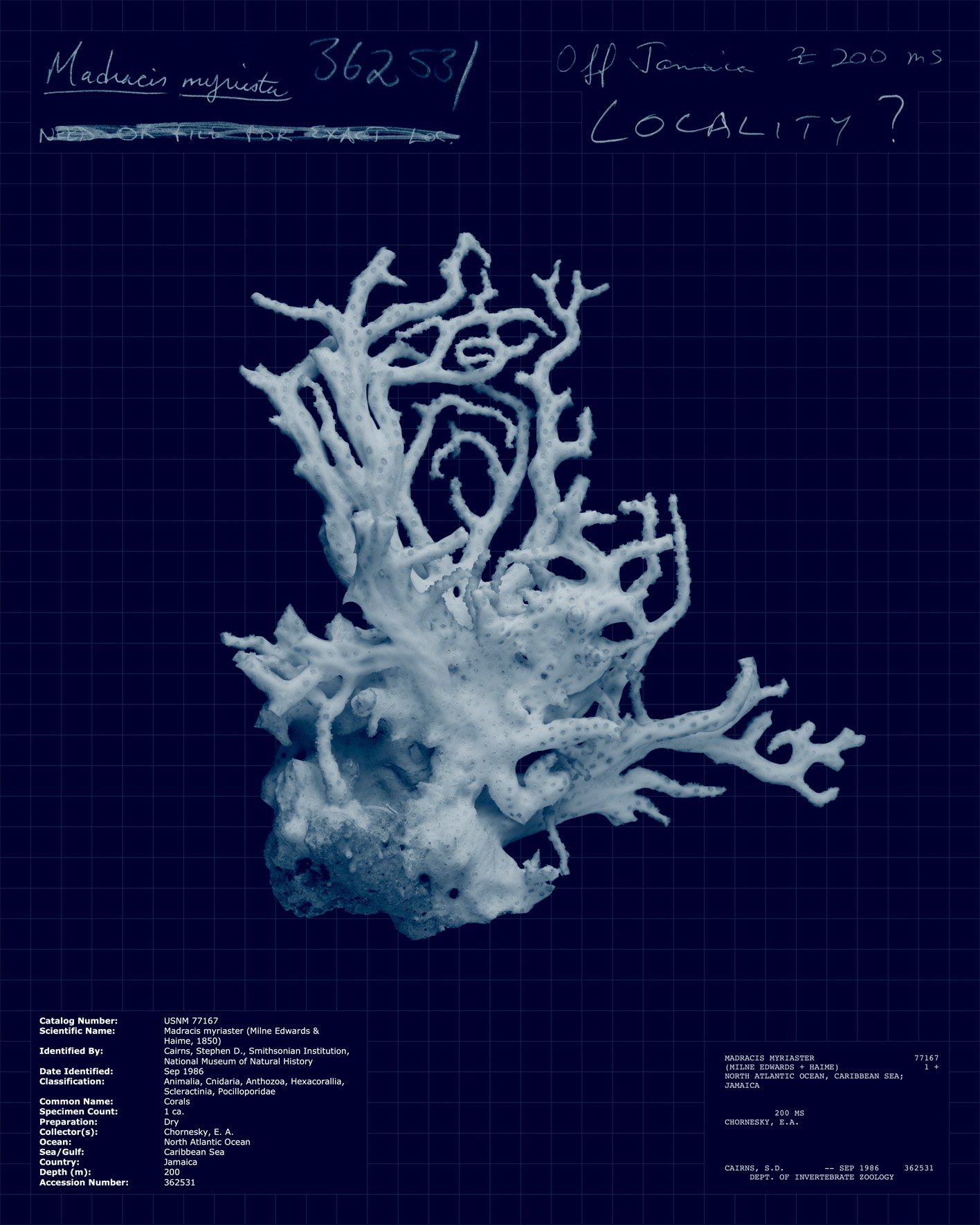
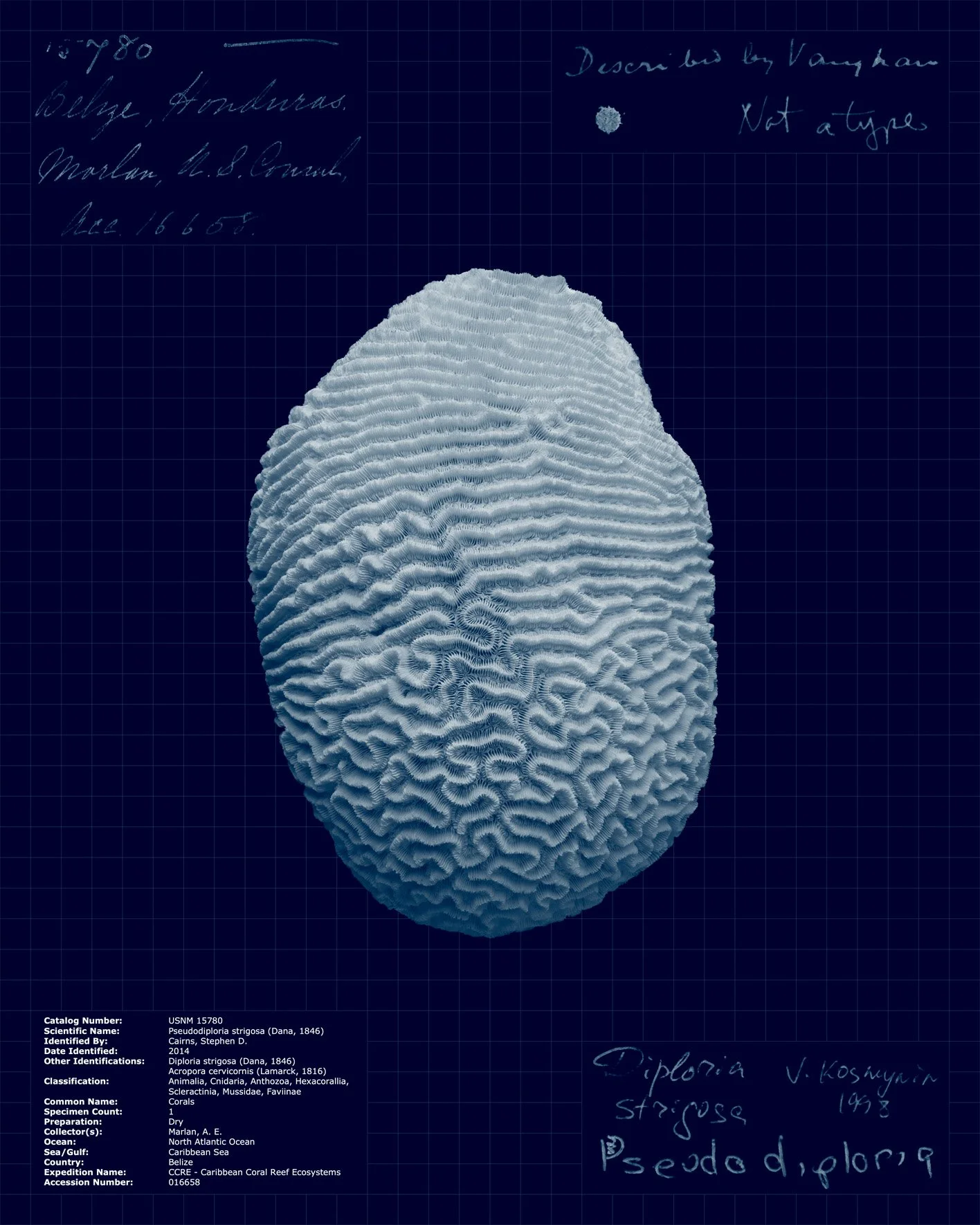
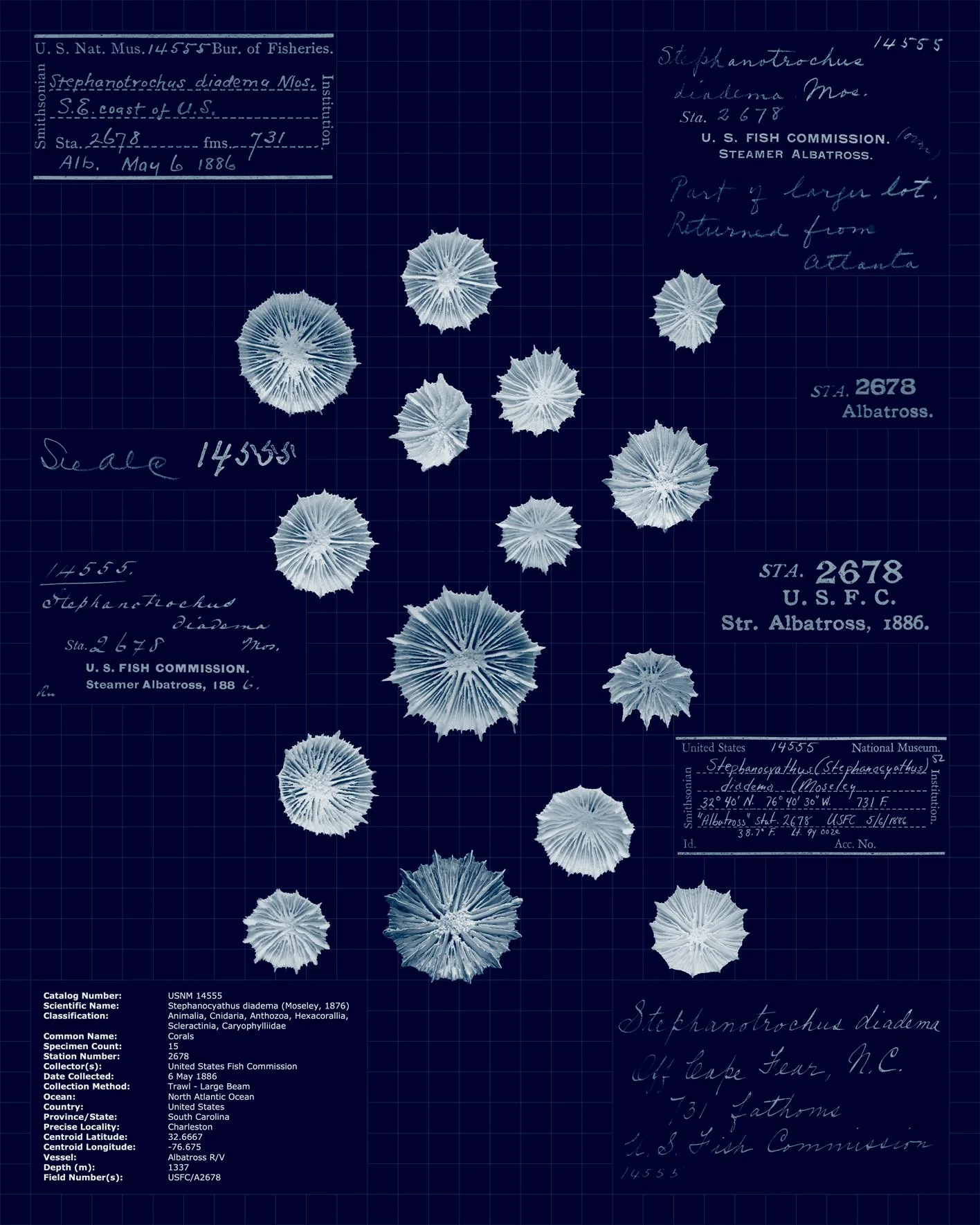
Fungia confertifolia
2019
15” x 12”
Cyanotype